
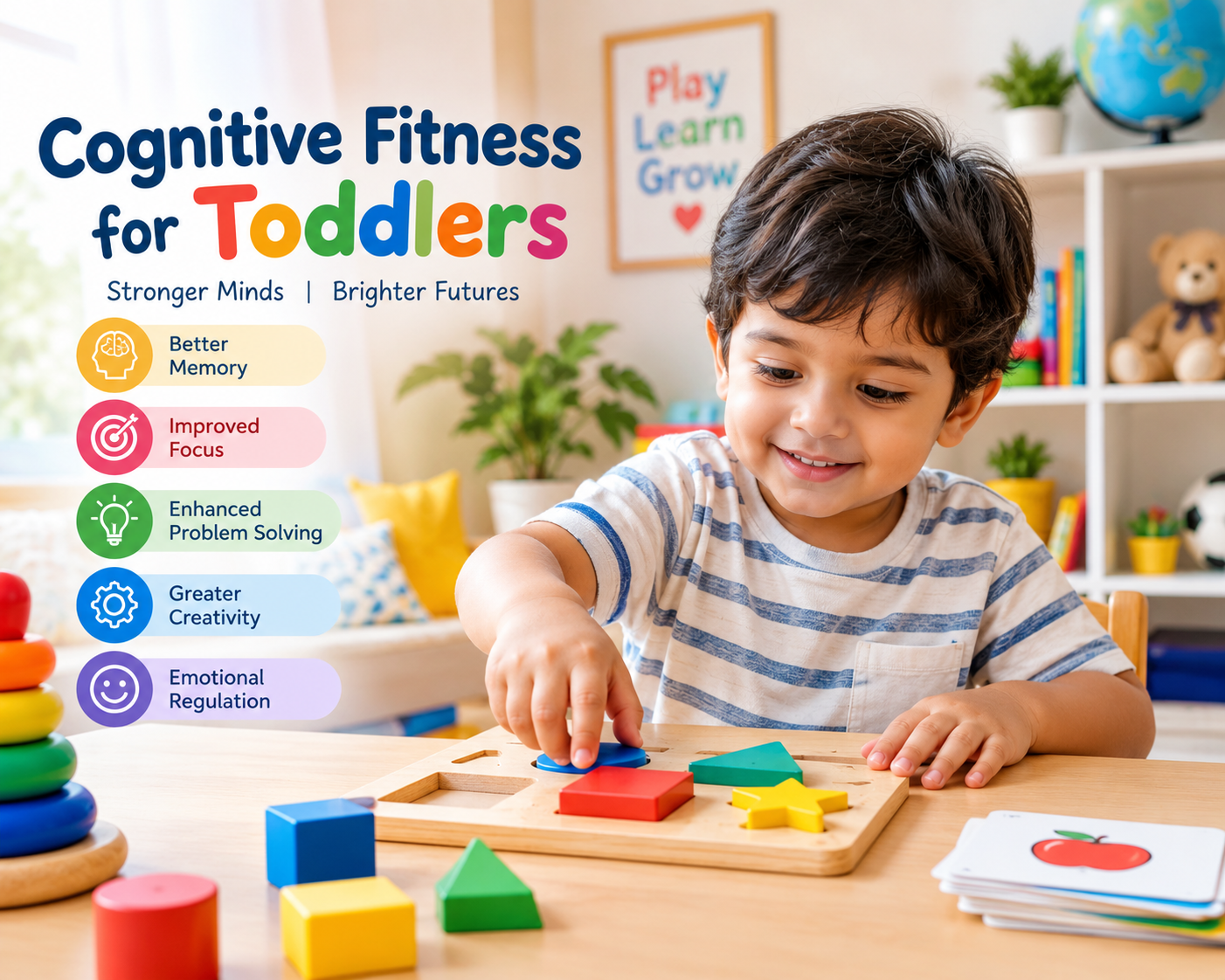
Toddlers learn through everything they do. Playing with blocks, looking at picture books, remembering where a toy is kept or following a simple instruction can all involve important thinking skills. These everyday moments can become valuable learning experiences when children are given the right environment and encouragement.
Cognitive Fitness for Toddlers focuses on helping young children develop skills such as attention, memory, coordination, flexible thinking and simple problem-solving through playful activities.
What Is Cognitive Fitness for Toddlers?
Cognitive fitness means giving children opportunities to observe, think, remember and respond.
For toddlers, learning should not feel like formal studying. Simple activities such as matching objects, sorting colours, completing puzzles, remembering items or following instructions can encourage cognitive development.
The activities should always be appropriate for the child’s age and interests.
Why Are Cognitive Skills Important?
During the toddler years, children are learning rapidly. They are developing language, coordination, independence and the ability to understand their surroundings.
For example, when a child follows the instruction, “Put the ball in the box,” they need to listen, remember the instruction and complete the action.
Activities can help children practise:
- Attention
- Working memory
- Observation
- Coordination
- Flexible thinking
- Problem-solving
- Self-control
These skills develop gradually through play and everyday interaction.
Simple Activities Parents Can Try
Parents do not need expensive equipment to support early learning.
Memory Games: Hide one familiar object and ask your child what is missing.
Sorting Games: Ask your child to group toys by colour, shape or size.
Storytelling: Read picture books and ask simple questions about the characters and pictures.
Movement Games: Try balancing, jumping, throwing a ball or copying simple movements.
These activities can make learning enjoyable while encouraging children to think and participate.
What Does a Structured Program Include?
A structured Cognitive Fitness for Toddlers program can provide activities based on a child’s age and developmental stage.
Head & Heart’s toddler program focuses on areas such as working memory, inhibitory control and cognitive flexibility. It also includes fine-motor, gross-motor and sensory activities.
The aim is not to make toddlers study like older children. Instead, activities are designed to encourage learning through interaction and play.
Parents looking for online cognitive training for toddlers should also check whether the program is interactive and suitable for the child’s age.
If you are searching for Cognitive Fitness for Toddlers near me, consider the activities, trainer experience, age group and teaching approach before choosing a program.
Supporting Learning at Home
Parents can support cognitive development through everyday activities. Let children sort their toys, make simple choices, follow instructions and try to solve small problems themselves.
Give them time to try before immediately providing the answer. A child figuring something out independently can be a valuable learning experience.
Head & Heart’s Toddler Program
Head & Heart offers a dedicated program designed to support early cognitive development through playful activities. The program includes memory, cognitive flexibility, self-control, sensory play and motor activities.
Learn more about the Cognitive Fitness – Toddlers program.
Frequently Asked Questions
What is Cognitive Fitness for Toddlers?
It uses age-appropriate activities to encourage memory, attention, coordination, flexible thinking and problem-solving.
Can parents do cognitive activities at home?
Yes. Memory games, storytelling, sorting, puzzles and movement games are simple options.
Is online cognitive training suitable for toddlers?
It can be, provided the activities are designed specifically for toddlers and are interactive and age-appropriate.
How can I find Cognitive Fitness for Toddlers near me?
Compare local programs based on their activities, trainers, age suitability and learning approach before choosing one.


