In today’s fast-paced world, children and adults often struggle with distractions, stress and difficulty maintaining focus. Brain Yog is a mindful practice that combines breathing exercises, gentle movements, meditation and mudras to encourage a calm and focused state of mind.
For children, these practices can be introduced through simple and engaging activities that fit naturally into their daily routine. Regular practice may help them develop better concentration, become more aware of their thoughts and emotions, and approach learning with a calmer mindset.
At Head and Heart, Brain Yog is designed for both children and adults, with techniques that can be adapted to different age groups and individual needs. The goal is to create a simple, practical routine that supports mental clarity, relaxation and overall well-being.
Whether you’re looking to improve focus, manage everyday stress or introduce mindfulness into your routine, Brain Yog can be a gentle way to begin.
What Is Brain Yog?
Brain yog (you’ll also see it called brain yoga) is a gentle set of exercises borrowed from traditional yoga: slow breathing, hand gestures called mudras, eye movements and a little quiet meditation. There’s no twisting yourself into pretzels, and no equipment needed. Kids as young as five can do it, and so can their grandparents.
Top Benefits of Brain Yog for Focus, Memory and Calm
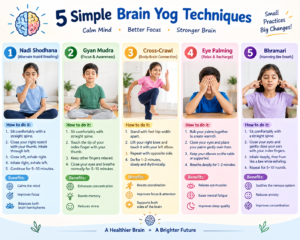
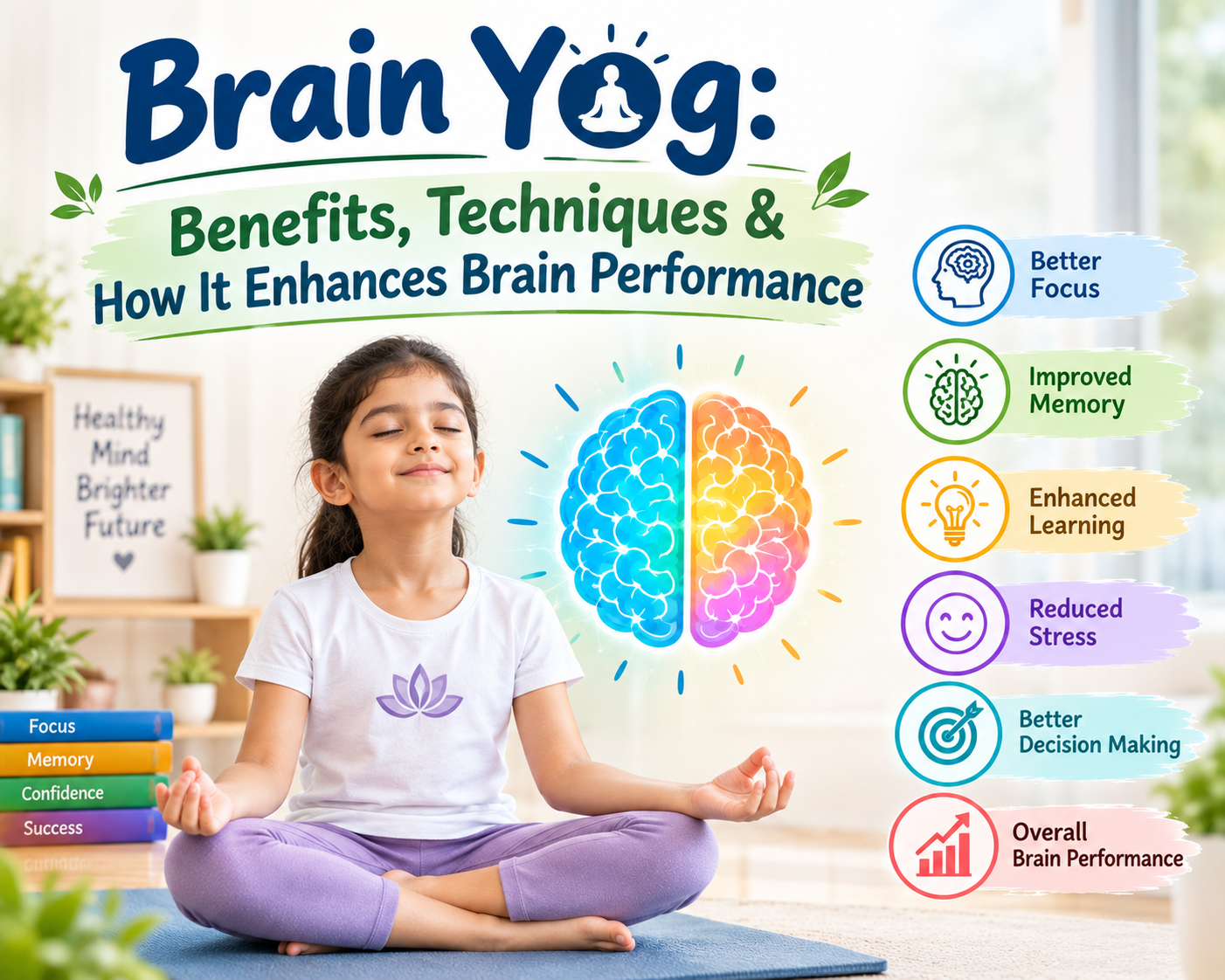
Brain yog isn’t medicine, and it won’t create a genius overnight. But research on yoga and mindfulness, summarised in this NCCIH overview of yoga, points to real support for stress, attention and well-being. Regular practisers tend to report:
How regular brain yog practice supports everyday brain performance.
- Steadier focus. Slow breathing quietens the mental chatter, so sticking with one task gets easier.
- Better recall. When you’re calm, information sticks.
- Less stress. A few minutes of breathwork can take the edge off a rough day.
- Easier bedtimes. A settled mind winds down faster.
- More confidence. Kids often grow more patient and willing to try new things.
5 Simple Brain Yog Techniques to Try at Home
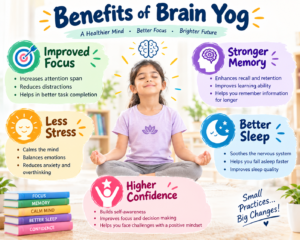 Two to five minutes in the morning, or before homework, is plenty.
- Nadi Shodhana (alternate nostril breathing). Close your right nostril with your thumb, breathe in through the left, then switch. Continue for a minute or two.
- Gyan Mudra. Sit comfortably, touch your thumb to your index fingertip and breathe slowly. It’s a traditional gesture linked with concentration.
- Cross-crawl. Bring your right elbow to your left knee, then swap sides. Twenty rounds, like marching on the spot.
- Eye palming. Rub your hands together until warm, then rest them gently over closed eyes for thirty seconds. Great after screen time.
- Bhramari (humming bee breath). Breathe in deeply and hum as you breathe out. Silly at first, surprisingly soothing.
A quick note: some classes also teach Super Brain Yoga (ear-lobe squats). The evidence for it is thin, so treat it as a relaxing exercise, and skip it if you have knee problems.
How Brain Yog Enhances Brain Performance
Here’s the simple logic. When you’re stressed, your mind is busy managing that stress, leaving less for thinking and learning. Slow breathing helps turn the stress response down. Mindful practice also builds a useful habit: noticing when your attention wanders and bringing it back. Do that daily and it carries over into schoolwork and office work. Consistency beats intensity: five minutes every day does more than one long session a month.
How to Choose the Right Brain Yog Class Near You
If you’re searching for a brain yog class near me, the closest address isn’t always the best fit. Look for these, the same standard we hold ourselves to at Head and Heart:
- Trained, experienced trainers who are patient with children.
- Batches by age group, with small numbers so everyone gets attention.
- A free demo class, so you can see the teaching style before committing.
- In-person and online options for busy schedules.
- Honest Google reviews from real parents and students.
Curious? Have a look at our brain yog for kids programme, try our online brain yog classes, or book a free demo class at Head and Heart.
Final Thoughts
Brain yog is one of those small habits that quietly pays off. Try the five techniques above this week, and when you’re ready for some guidance, we’d love to meet you. Contact the Head and Heart team with any questions, or read more about yoga in India from the Ministry of AYUSH.
Frequently Asked Questions (FAQ)
What is a brain yog class?
A guided session where a trainer teaches breathing, mudras, eye movements and mindfulness for better focus, memory and calm.
What is the right age to start brain yog?
Most children can begin around five. Kids’ batches use games and stories; adult batches focus on stress and work.
How long does brain yog take to show results?
Many people feel calmer within two to four weeks. Focus and memory gains build over a few months, and results vary.
Is brain yog scientifically proven?
Research backs yoga and mindfulness for stress and attention, but studies on specific brain yog routines are limited. It supports, not replaces, medical care.
Are online brain yog classes as good as in-person ones?
Live online classes work well for busy families; in-person ones allow posture correction. Pick whichever you’ll stick with.
How do I find the best brain yog class near me?
Check the trainer’s background, read recent reviews and book a demo first. At Head and Heart, you can start with a free demo class.