Every child learns differently. Some children enjoy drawing, music and creative activities, while others naturally enjoy numbers, puzzles, patterns and logical challenges. This often leads parents to search for right brain training for kids or left brain training for kids.
But is it better to train one side of the brain?
The answer is no. Children benefit from developing a balanced set of cognitive skills. The brain works as an interconnected system, and learning often requires multiple abilities working together. A well-designed brain development program for kids can therefore include activities that encourage creativity, memory, attention, reasoning and problem-solving.
What Is Right Brain Training for Kids?
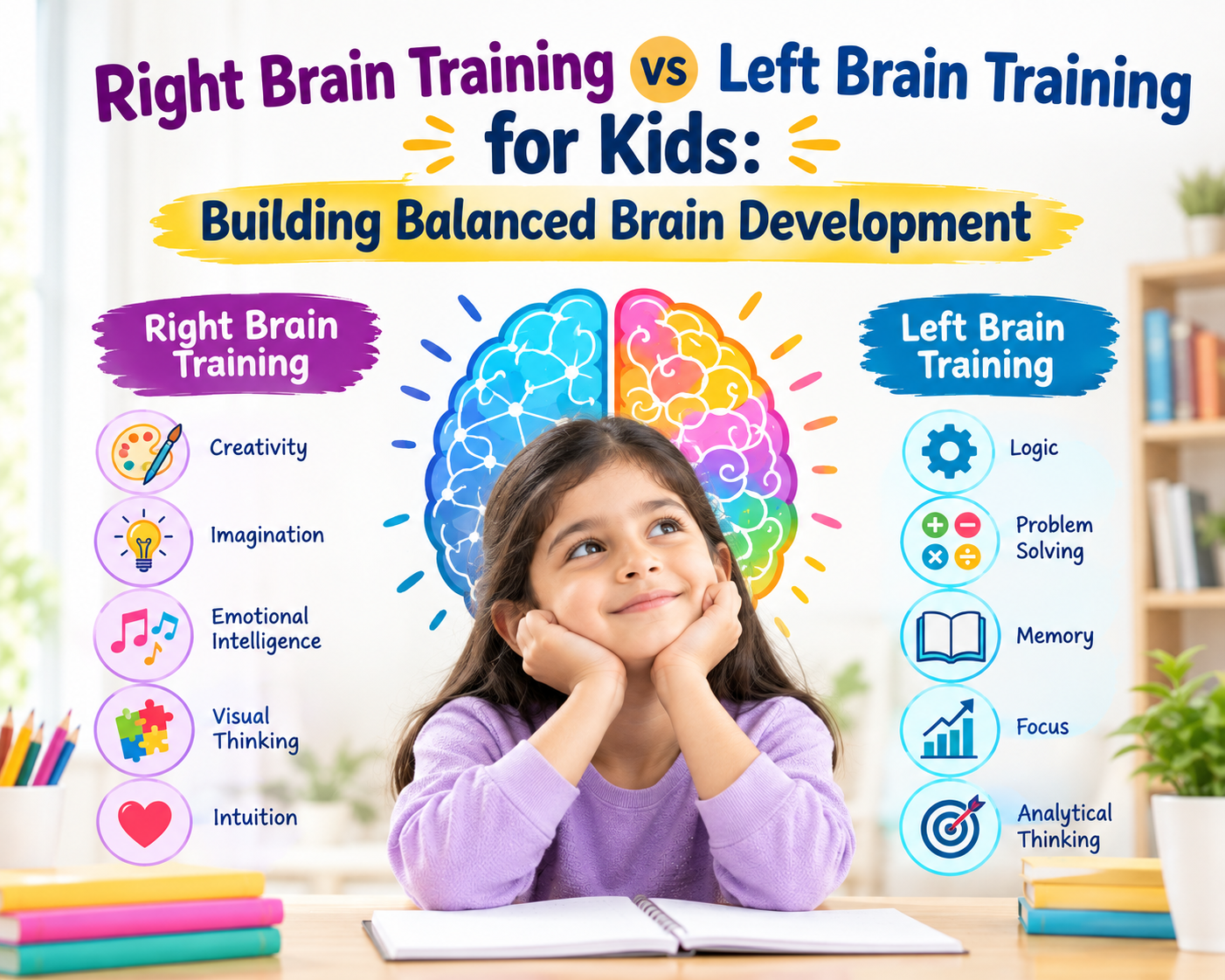
The term right brain training for kids is commonly used for activities associated with creativity, visual processing, imagination and holistic thinking.
Activities may include:
- Drawing and creative expression
- Visual memory games
- Music and rhythm activities
- Puzzles and visual patterns
- Storytelling
- Imagination-based activities
- Spatial awareness exercises
These activities can make learning more engaging while giving children opportunities to practise different cognitive skills.
However, it is important not to think of the right side as being responsible only for creativity. Modern neuroscience shows that complex tasks generally involve networks across both sides of the brain.
What Is Left Brain Training for Kids?
Left brain training for kids is often used to describe activities involving language, sequencing, analytical thinking, reasoning and problem-solving.
Examples include:
- Number games
- Logical puzzles
- Reading and vocabulary activities
- Sequencing exercises
- Pattern recognition
- Mental calculations
- Problem-solving challenges
These activities can support cognitive skills that children use during academic learning and everyday decision-making.
The goal should not be to make a child “left-brained” or “right-brained.” Instead, children should have opportunities to practise a variety of skills.
Why Balanced Brain Development Matters
Children constantly use multiple cognitive abilities together.
For example, solving a mathematics problem may require attention, memory, reasoning and visual processing. Writing a story may involve language, imagination, memory and planning.
This is why a comprehensive brain development program for kids can be more beneficial than focusing exclusively on one type of activity.
A balanced approach can include brain development activities designed around:
- Focus and concentration
- Memory
- Creativity
- Logical reasoning
- Visual processing
- Problem-solving
- Learning skills
Right Brain Training vs Left Brain Training: Which Is Better?
Rather than asking whether right brain training for kids is better than left brain training for kids, parents should ask whether a program provides varied and age-appropriate cognitive practice.
A good brain training for kids approach should encourage children to think, observe, remember, solve problems and express ideas.
For example, a single activity could combine visual recognition, memory and reasoning. This type of integrated practice reflects how children actually learn.
How Brain Training Can Support Concentration and Memory
Concentration and memory are essential for classroom learning. Children need to pay attention to instructions, remember information and apply what they have learned.
Structured cognitive activities can provide opportunities to practise these skills.
Parents searching for a Concentration Improvement Program, memory improvement for kids, or brain training programs near me should look for programs that are structured, age-appropriate and guided by trained professionals.
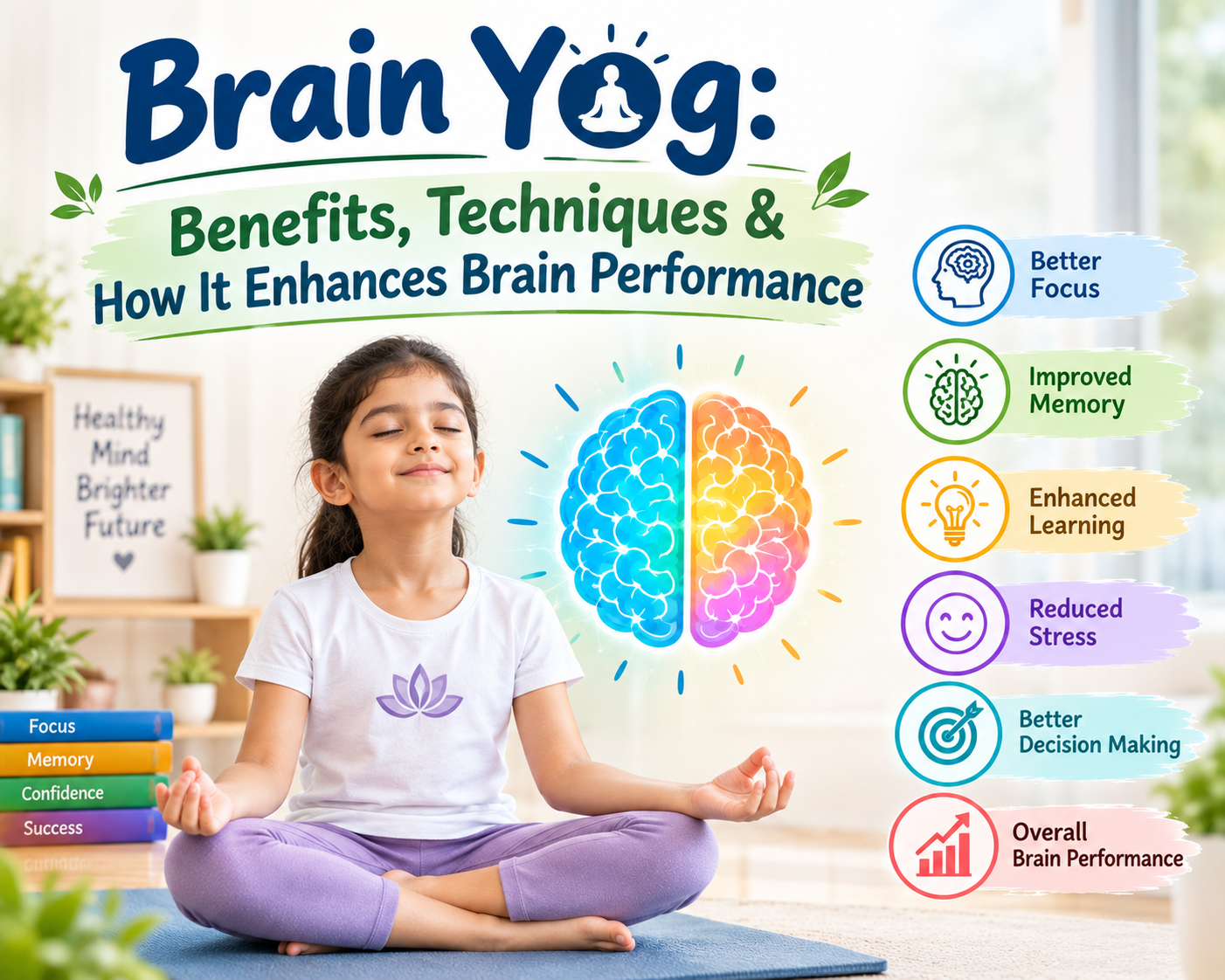
At Head & Heart, programs such as Brain Optimization, Brain Yog, M Power and Cognitive Fitness are designed around different cognitive and developmental needs.
How to Choose a Brain Development Program Near Me
If you are searching online for a brain development program near me, consider these factors before enrolling your child:
- Age suitability: Activities should match the child’s developmental stage.
- Skill coverage: Look for a program that addresses multiple cognitive skills rather than promising to develop only one “side” of the brain.
- Structured training: Consistent and organised activities are preferable to random games.
- Individual attention: Every child has different strengths and areas that need practice.
- Progress monitoring: A quality program should have a way to observe and discuss development over time.
Parents can also explore an online brain training program if travelling to a centre is difficult, provided the program offers appropriate guidance and interaction.
Why Choose Head & Heart for Brain Development?
Head & Heart offers structured programs focused on cognitive development and skills such as focus, memory, creativity and learning.
Instead of focusing on a simplistic “right brain versus left brain” concept, parents can look at brain development more holistically and choose activities that provide children with opportunities to develop different cognitive abilities.
If you’re looking for a brain development program for kids, explore the programs offered by Head & Heart and choose an approach suited to your child’s age and learning needs.
Want to understand which program may be suitable for your child? Connect with Head & Heart to explore the available brain training options.
Frequently Asked Questions
- What is right brain training for kids?
Right brain training for kids generally refers to activities involving creativity, visual processing, imagination, spatial skills and related cognitive abilities.
- What is left brain training for kids?
Left brain training for kids is commonly used to describe activities involving language, sequencing, analytical thinking, logic and problem-solving.
- Is right brain training better than left brain training?
Neither should be considered universally better. Children use interconnected brain networks for learning, so a balanced approach involving different cognitive skills is preferable.
- What activities support brain development for kids?
Puzzles, reading, memory games, creative activities, pattern recognition, problem-solving, storytelling, music and age-appropriate cognitive exercises can all provide useful learning opportunities.
- How can I find a brain development program near me?
Search for a brain development program near me and compare the program structure, age suitability, trainer expertise, activities and approach before choosing one.
- Can brain training improve concentration in children?
Structured activities can provide children with opportunities to practise attention and concentration. Consistency, age suitability and the overall learning environment are important factors.
- Can children do brain training online?
Yes, children can participate in an online brain training program, depending on their age, the program design and the level of guidance provided.