
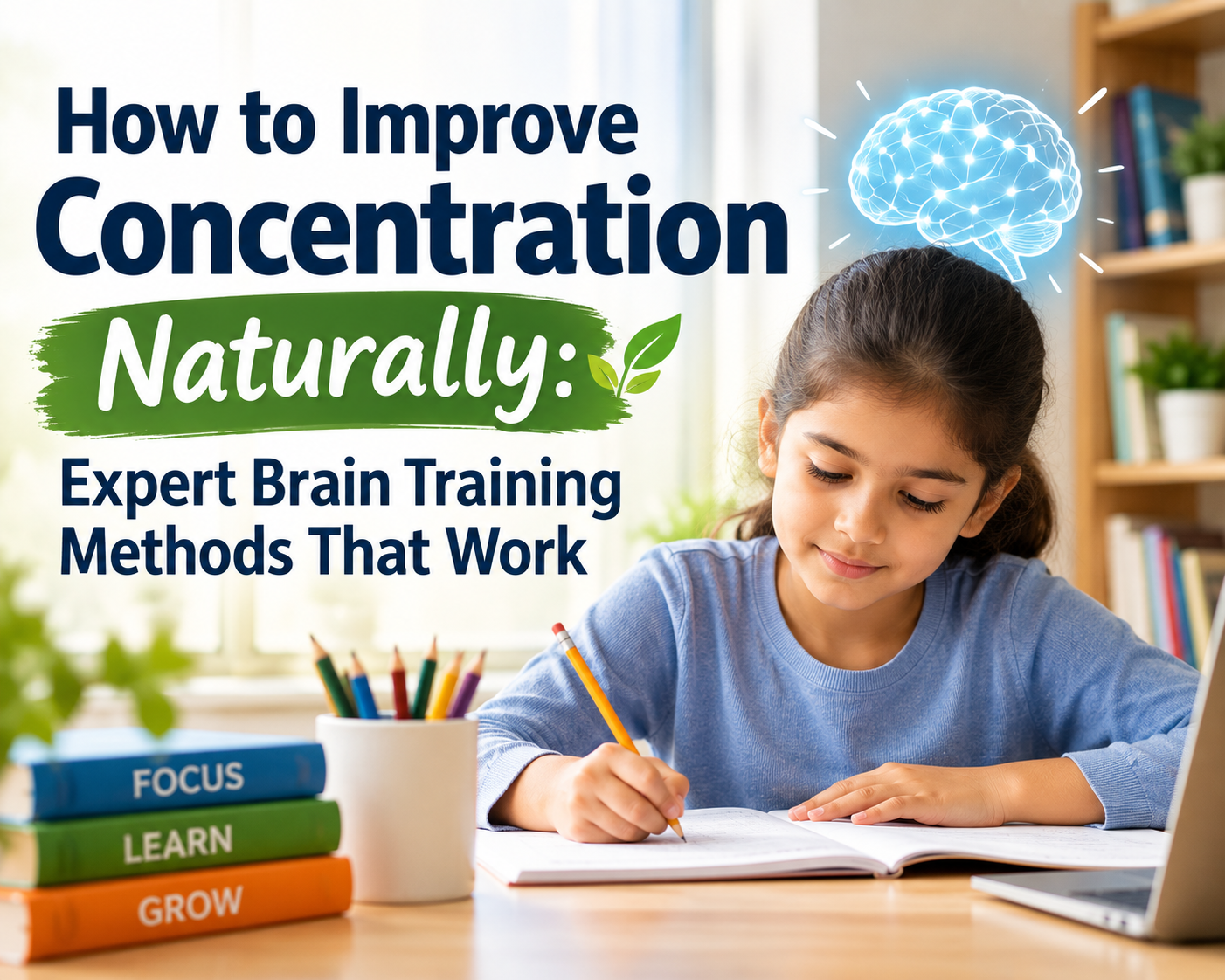
Struggling to focus – whether it’s your child zoning out during homework or you losing your thread in back-to-back meetings is one of the most common concerns parents and adults bring to us. The encouraging part is that concentration isn’t fixed. With the right daily habits and structured brain development work, focus can be built like a skill, not left to chance.
Why Concentration Breaks Down
Concentration depends on a few brain systems working together: sustained attention, working memory, and the ability to filter out distractions. When any of these lag – due to age, stress, screen habits, sleep, or conditions like ADHD – focus suffers. This is exactly why a general-purpose brain development program for kids looks different from a self-help article aimed at adults; the underlying skill gaps are often different.
Natural Ways to Improve Concentration
1. Protect Sleep and Movement First
No brain exercise outperforms basic biology. Consistent sleep and regular physical activity are consistently linked to sharper attention and better memory consolidation. Before adding any training program, get these fundamentals steady.
2. Practice Single-Tasking
Multitasking fragments attention. Simple habits one tab open, one task at a time, phone in another room rebuild the brain’s tolerance for sustained focus over just a few weeks of practice.
3. Use Timed Focus Blocks
Short, timed work intervals (start with 15–20 minutes) followed by a break train the brain to sustain attention in manageable chunks rather than forcing an unrealistic all-day focus.
4. Add Structured Brain Training
Beyond lifestyle habits, targeted cognitive exercises memory drills, pattern recognition, attention-shifting tasks build the underlying mental muscles concentration depends on. This is where a dedicated concentration improvement program online can help, especially when it’s supervised and adapts in difficulty over time.
5. Reduce Passive Screen Time
Not all screen time is equal. Passive scrolling trains rapid attention-switching, the opposite of sustained focus. Replacing some of it with active, goal-based tasks supports better concentration long-term.
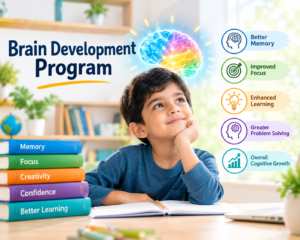
Brain Development Programs: What They Actually Offer
A well-designed brain development program combines several of the above into a structured plan rather than leaving families to guess. Look for programs that offer:
- Individual assessment before starting, not a one-size-fits-all module
- Trackable progress across sessions
- A mix of online and in-person options
- Support for related challenges like ADHD, mild learning difficulties, or anxiety-driven distraction
If you’d rather work with a professional nearby, searching for a brain development program near me or brain training programs near me connects you with practitioners who can combine assessment, coaching, and parent guidance — something a generic app can’t fully replicate.
Online vs. In-Person: Which Should You Choose?
Online programs offer flexibility and consistency, which matters for young kids’ packed schedules or adults balancing work. In-person programs can offer closer supervision for more complex needs. Many families use a hybrid: a concentration improvement program online for regular practice, paired with periodic in-person check-ins for full assessment.
For general, research-backed context on attention and brain development, the American Psychological Association’s resources on attention and cognition are a useful independent reference.
How Head and Heart Can Help
At Head and Heart, our brain development program for kids and adult-focused concentration coaching combine structured cognitive exercises with practical daily-life strategies, so improvements show up at school, work, and home — not just during a session. Explore our programs or get in touch with our team to find the right fit for your family.
Frequently Asked Questions
- Can concentration really be improved naturally, without medication?
Yes, for many people. Sleep, movement, single-tasking, and structured brain training can meaningfully improve focus, though results vary and some individuals may still benefit from professional evaluation.
- What age should a child start a brain development program?
Most structured programs work well from around age 5–6 onward, once a child can follow simple instructions consistently.
- How is a concentration improvement program online different from a focus app?
A supervised concentration improvement program online typically includes assessment, professional guidance, and progress tracking — not just standalone games, which improves how well gains transfer to real life.
- How long before I notice a difference in focus?
Many people notice small improvements within 3–4 weeks of consistent practice, with more significant change over a few months.
- Should I choose an online or nearby program?
If you want flexibility, online works well. If you prefer in-person assessment, searching for a brain development program near me is a good starting point — some families do both.