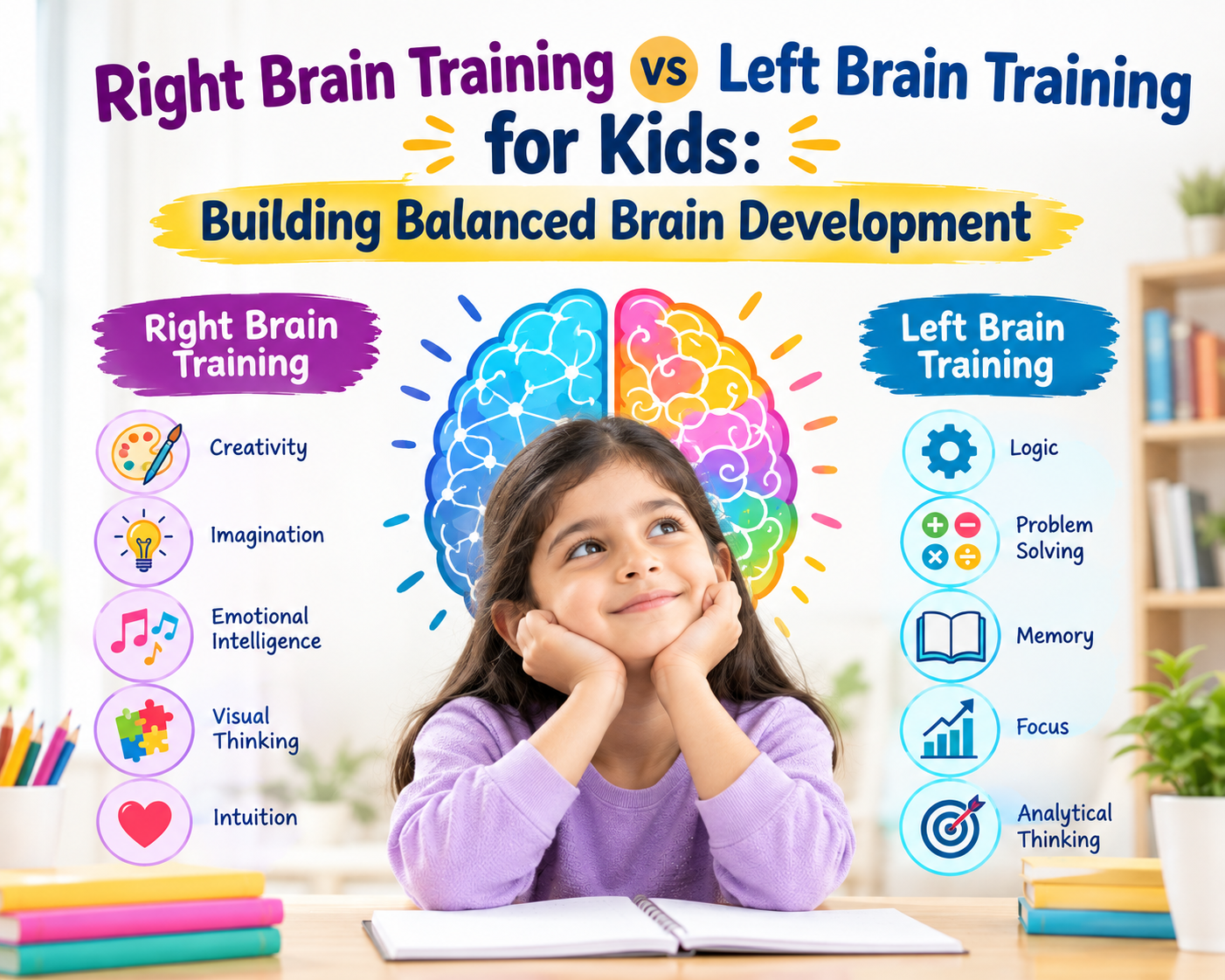
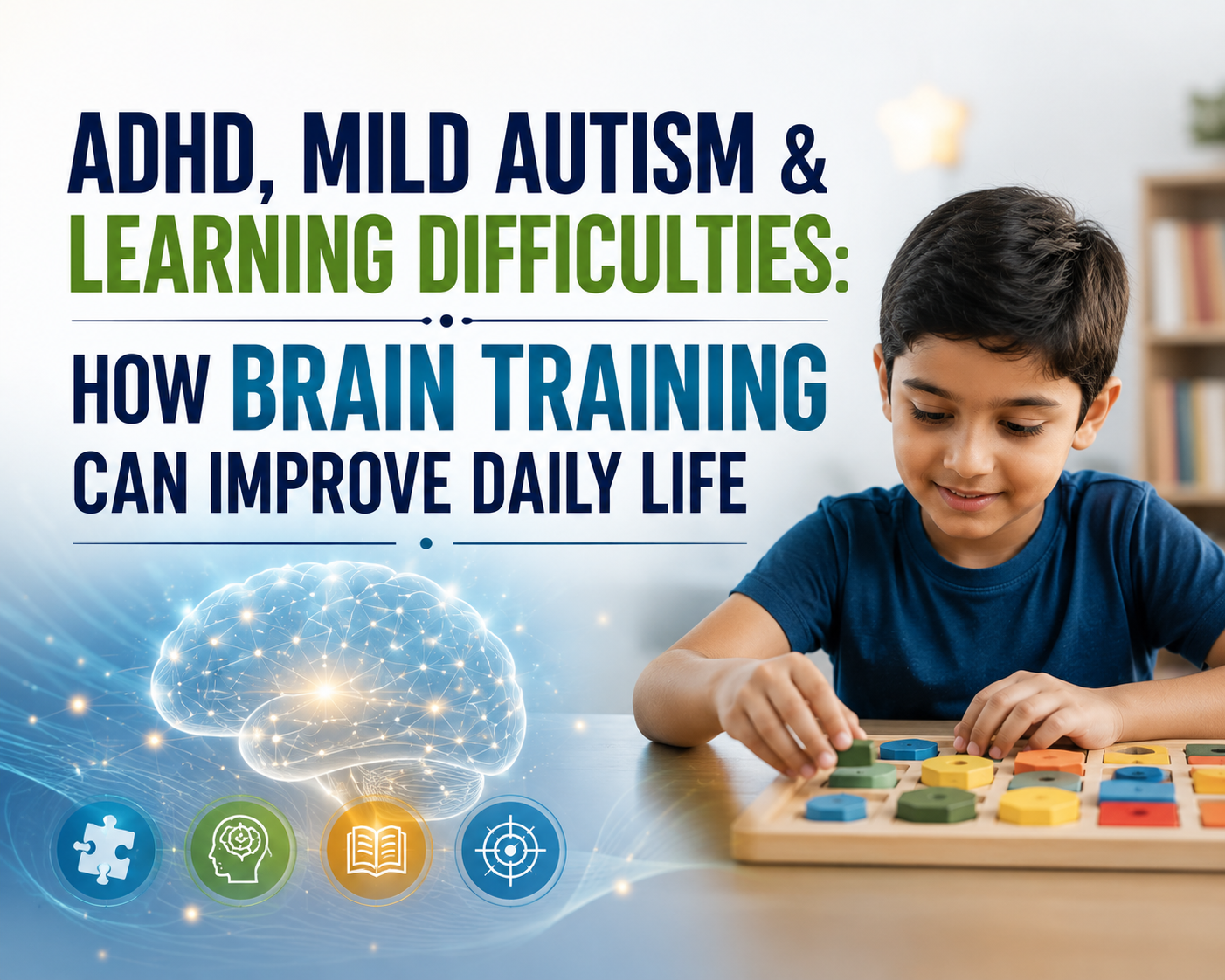
Living with ADHD, mild autism, or a learning difficulty can make ordinary parts of the day homework, work meetings, chores, conversations feel harder than they need to be. The good news is that the brain is trainable. With the right approach, brain training for ADHD can help children and adults build focus, self-control, and confidence over time.
In this guide, we’ll break down what brain training actually is, how it helps with ADHD, mild autism, and learning difficulties, and how you can get started whether you’re looking for training for ADHD online, parent training for ADHD online, or structured cognitive training for ADHD adults and cognitive training for ADHD children.
Understanding ADHD, Mild Autism, and Learning Difficulties
These three conditions are distinct, but they often overlap and share some daily-life challenges:
- ADHD (Attention-Deficit/Hyperactivity Disorder): Difficulty sustaining attention, impulse control, and regulating activity levels.
- Mild Autism (Level 1 Autism Spectrum Disorder): Challenges with social communication, flexibility, and sensory processing, alongside many individual strengths.
- Learning Difficulties: Conditions like dyslexia, dyscalculia, or processing-speed challenges that affect reading, math, or information processing, independent of intelligence.
Many children and adults live with more than one of these at once, which is why individualized support — not a one-size-fits-all fix — tends to work best.
What Is Brain Training, and Does It Actually Help?
Brain training refers to structured mental exercises designed to strengthen specific cognitive skills — attention, working memory, processing speed, and impulse control. It’s not a cure, and results vary from person to person, but for many families it’s a useful addition to therapy, medication (where prescribed), and school or workplace accommodations.
It’s worth setting realistic expectations: research on cognitive/brain-training programs shows the clearest gains on the specific tasks practiced, with more modest evidence for how well those gains transfer to everyday life. Because of this, the best programs pair drills with real-world coaching, so skills actually carry over to school, work, and home.
How Brain Training Supports Daily Life
- Better focus during school or work tasks — fewer missed instructions, less zoning out
- Improved working memory — remembering multi-step instructions or a shopping list
- Stronger impulse control — pausing before reacting in social or classroom situations
- Reduced overwhelm — building routines that reduce daily friction
- Increased independence — less reliance on constant reminders from parents or partners
Cognitive Training for ADHD Children
Children with ADHD often benefit most from short, game-like sessions that hold their attention while building skills like sustained focus and working memory. Good cognitive training for ADHD children programs typically combine:
- Adaptive digital exercises that get harder as the child improves
- Regular progress tracking shared with parents and teachers
- Real-world “bridge” activities that connect the skill practiced to homework or classroom behavior
Look for brain training for ADHD child online programs that are supervised by a qualified professional rather than a purely app-based, unsupervised tool — human guidance makes a real difference in whether the skills stick.
Cognitive Training for ADHD Adults
Adults with ADHD juggle deadlines, finances, relationships, and often parenting — all while managing distractibility and time-blindness. Cognitive training for ADHD adults usually focuses on:
- Executive function coaching (planning, prioritizing, task initiation)
- Working memory and attention drills tailored to work demands
- Practical strategies for time management and reducing procrastination
Many adults prefer flexible, remote formats, which is why training for ADHD online has grown in popularity — it fits around work schedules and doesn’t require travel to a clinic.
Why Parent Training Matters
Brain training works best as a team effort. Parent training for ADHD online programs teach parents how to:
- Reinforce the skills their child is learning in training sessions
- Use consistent, low-conflict behavior strategies at home
- Communicate effectively with teachers and support staff
- Recognize early signs of frustration or sensory overload
When parents and children are learning the same language and strategies, progress tends to be faster and more consistent.
Choosing the Right Brain Training Program
When evaluating a program — for a child, an adult, or the whole family — ask:
- Is it led or supervised by licensed professionals (psychologists, occupational therapists, special educators)?
- Does it include parent training for ADHD online components, not just child-only exercises?
- Is progress measured with clear, trackable goals?
- Does the program adapt to mild autism and learning difficulties, not just ADHD in isolation?
- Can sessions be done online, for flexibility around school or work?
For a deeper look at evidence-based approaches to attention and executive function, resources like the CDC’s ADHD overview and National Institute of Mental Health’s ADHD page are useful starting points for independent research.
How Head and Heart Can Help
At Head and Heart, we design individualized programs that combine cognitive training for ADHD children and adults with structured parent training for ADHD online, so progress made in a session actually shows up at home and school. If you’re exploring brain training for ADHD child online or looking for adult-focused support, get in touch with our team to discuss a plan suited to your family’s needs. You can also read more on our ADHD support services page and our learning difficulties resources.
Frequently Asked Questions
- What is brain training for ADHD, and how does it work?
Brain training uses structured, repeatable exercises to strengthen specific cognitive skills like attention, working memory, and impulse control. Over time and with consistent practice, many individuals find these skills easier to apply in daily situations like schoolwork or meetings.
- Is online brain training as effective as in-person sessions?
Well-designed training for ADHD online programs can be just as effective as in-person options, especially when they include live guidance from a professional and regular progress check-ins, rather than relying on an app alone.
- Can brain training help with mild autism and learning difficulties too?
Yes. While ADHD-focused exercises target attention and impulse control, similar cognitive-training principles — adapted for sensory needs and specific learning challenges — can support individuals with mild autism and conditions like dyslexia or dyscalculia.
- What age is appropriate to start cognitive training for ADHD children?
Many programs begin around ages 5–7, once a child can follow simple structured tasks, though this varies by individual. A professional assessment can help determine the right starting point.
- Why is parent training included in ADHD programs?
Parent training for ADHD online helps caregivers reinforce strategies at home, so the skills a child builds during sessions are supported consistently in daily routines — improving long-term outcomes.
- How long does it take to see results from brain training?
This varies widely by individual, condition severity, and consistency of practice. Some families notice small day-to-day improvements within weeks, while more significant, lasting change typically takes several months of consistent effort alongside other supports.
- Does brain training replace therapy or medication?
No. Brain training is best used as a complement to — not a replacement for — professional evaluation, therapy, and any medically prescribed treatment.