
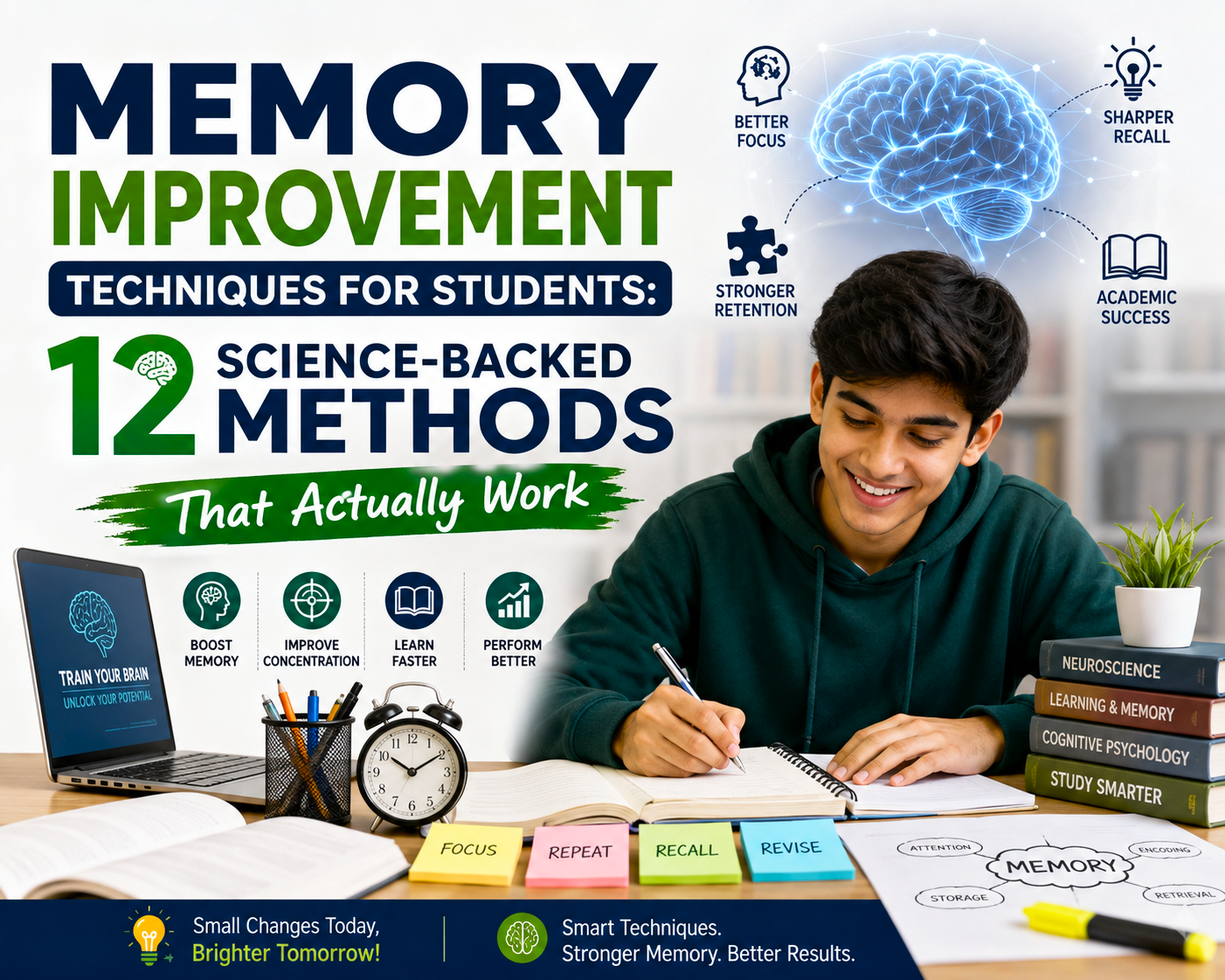
Cramming the night before an exam and forgetting half of it by morning is one of the most common frustrations students face. The problem usually isn’t effort — it’s technique. Cognitive science has spent decades studying exactly how the brain encodes, stores, and retrieves information, and the findings point to a clear conclusion: the right memory improvement techniques for students can dramatically improve how much you retain and for how long.
In this guide, we’ll walk through 12 research-backed techniques you can start using today, explain why they work, and cover when it might be worth enrolling in memory improvement classes for more structured, guided practice.
Why Students Struggle With Memory (And Why It’s Not Your Fault)
Most students are taught what to learn, but rarely how to remember it. Passive habits like re-reading notes or highlighting textbooks feel productive but are among the least effective ways to build lasting memory. The good news: memory is trainable. With the right strategies, anyone can significantly improve recall, focus, and long-term retention.
12 Memory Improvement Techniques for Students
1. Active Recall
Instead of passively reviewing notes, close your book and try to recall the information from memory. This retrieval practice strengthens the neural pathways used to access that information later, making it one of the most effective memory improvement techniques for students preparing for exams.
2. Spaced Repetition
Rather than studying a topic once and moving on, review it at increasing intervals — a day later, then a few days later, then a week later. This “spacing effect” is one of the most well-documented findings in learning science and is the foundation of popular study apps like Anki and Quizlet.
3. The Feynman Technique
Explain a concept in the simplest possible language, as if teaching it to a beginner. Gaps in your explanation reveal gaps in your understanding, and the act of simplifying and teaching reinforces memory far better than passive review.
4. Chunking Information
Break large amounts of information into smaller, meaningful groups. Phone numbers, dates, and formulas are all easier to remember when grouped logically rather than treated as one long stream of data.
5. Mnemonic Devices
Acronyms, rhymes, and vivid associations turn abstract facts into memorable shortcuts. The more unusual or vivid the association, the more likely it is to stick.
6. The Memory Palace (Method of Loci)
Mentally place pieces of information along a familiar route, like your walk from your bedroom to the kitchen. When you need to recall the information, you mentally “walk” the route again. This ancient technique remains one of the most powerful tools used by memory champions and top students alike.
7. Interleaved Practice
Instead of studying one topic for hours at a stretch, mix related topics or problem types within a single session. It feels more difficult in the moment, but it builds deeper, more flexible understanding that holds up better under exam conditions.
8. Dual Coding
Pair written information with visuals — diagrams, charts, or mind maps. Creating two different memory pathways (verbal and visual) makes information easier to retrieve later.
9. Prioritizing Sleep
Memory consolidation — the process of moving information from short-term to long-term storage — happens primarily during sleep. Pulling an all-nighter before an exam is one of the most counterproductive things a student can do.
10. The Pomodoro Technique
Study in focused 25-minute intervals followed by short breaks. This structure supports sustained attention, which is essential for encoding new information effectively, and helps prevent the mental fatigue that erodes memory later in a long study session.
11. Regular Physical Exercise
Aerobic exercise increases blood flow to the brain and supports the hippocampus, the region most closely tied to memory formation. Even a 20-minute walk before a study session can measurably improve focus and retention.
12. Structured Memory Improvement Classes
While self-study techniques go a long way, structured memory improvement classes offer guided training, accountability, and personalized feedback that’s hard to replicate alone. These classes — available both online and in person — often combine several of the techniques above into a step-by-step curriculum, making them a strong option for students who want faster, measurable results.
Should Students Take Memory Improvement Classes?
Not every student needs formal training, but memory improvement classes can be especially useful if you:
- Have tried self-study techniques without seeing consistent results
- Are preparing for high-stakes exams (board exams, entrance tests, professional certifications)
- Want structured accountability rather than a self-paced approach
- Prefer expert feedback on which techniques suit your specific learning style
Many memory improvement classes combine active recall drills, mnemonic training, and memory palace practice into a guided program — condensing months of trial-and-error self-study into a structured course.
Building a Simple Weekly Routine
You don’t need to use all 12 techniques at once. A simple, sustainable starting routine looks like this:
- Use active recall + spaced repetition for daily review sessions
- Apply chunking and mnemonics when learning new, dense material
- Use the memory palace technique for long lists or sequences
- Protect 7–8 hours of sleep, especially before exams
- Consider a memory improvement class if you want structured, faster progress
Frequently Asked Questions
What are the best memory improvement techniques for students?
Active recall and spaced repetition are widely considered the most effective, evidence-based memory improvement techniques for students, since they directly strengthen how information is retrieved rather than just reviewed.
How can I improve my memory power for studying fast?
Combine active recall with short, focused study sessions (like the Pomodoro Technique) and prioritize sleep. These three habits together produce noticeably faster improvements than any single technique alone.
Are memory improvement classes worth it for students?
For students who want structured guidance, accountability, and faster results, memory improvement classes can be a worthwhile investment — particularly ahead of major exams or competitive tests.
How long does it take to see results from memory training?
Many students notice improved focus and recall within 2–3 weeks of consistent practice, while deeper, long-term memory gains typically build over 1–3 months.
Can memory techniques help with exam anxiety too?
Indirectly, yes. Feeling well-prepared through structured review methods like active recall and spaced repetition reduces the uncertainty that often fuels exam anxiety.
Is it better to study online or join in-person memory improvement classes?
Both work well. Online classes offer flexibility and often lower cost, while in-person classes provide more direct feedback and accountability. Many students combine both for the best results.
Final Thoughts
Improving memory isn’t about working harder — it’s about working smarter with techniques that align with how your brain actually learns. Start with one or two methods from this list, stay consistent for a few weeks, and consider structured memory improvement classes if you want faster, more personalized progress. Small, consistent changes in how you study can lead to significantly better results, less stress, and more confidence going into every exam.