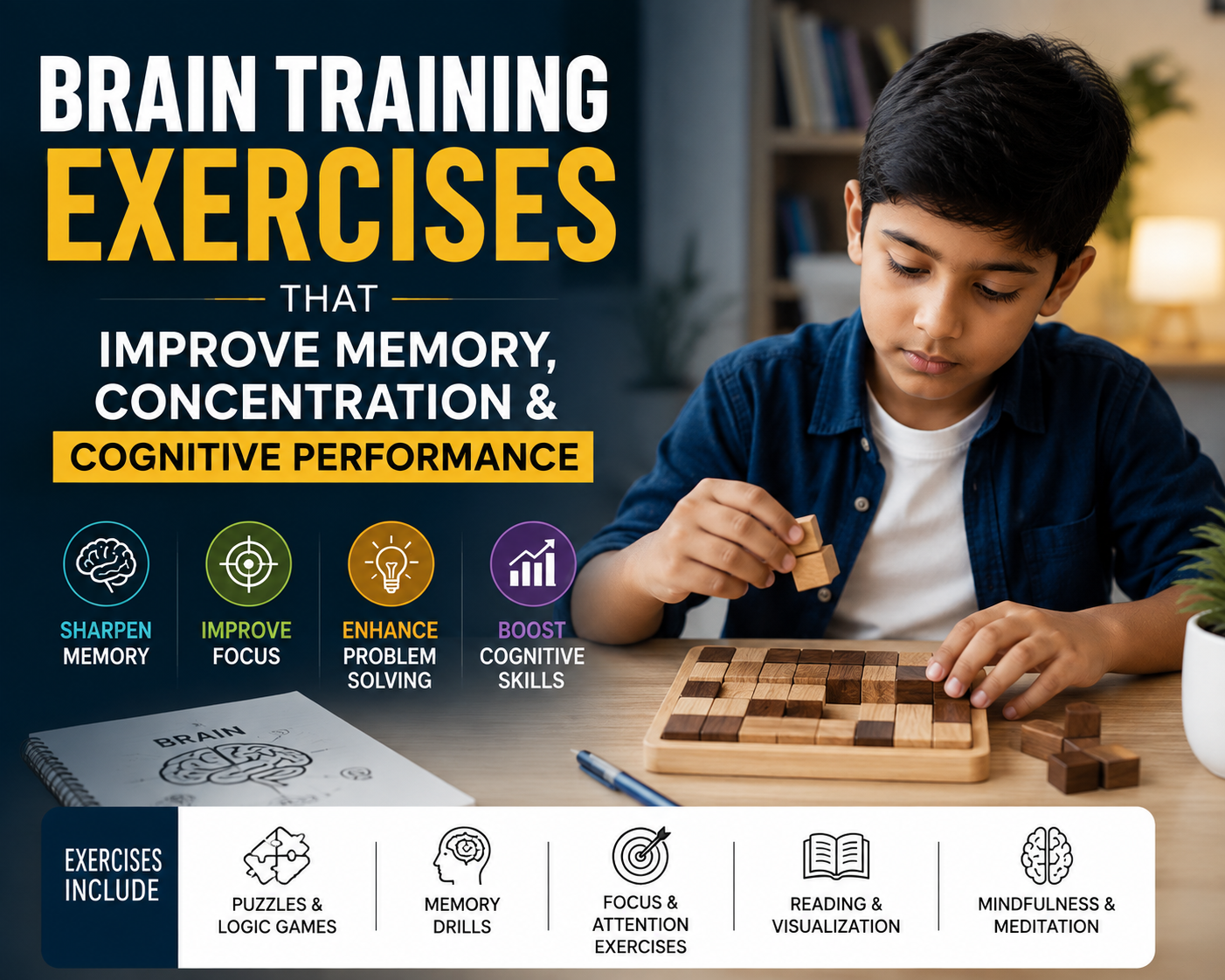
A child’s ability to learn, focus, and remember doesn’t depend only on intelligence — it depends on how well the brain is trained. Just like the body needs exercise to stay fit, the brain needs regular stimulation to stay sharp, alert, and efficient.
This is where Brain Training Exercises come in. These simple yet powerful activities are designed to strengthen memory, boost concentration, and enhance overall cognitive performance in children.
In this blog, we’ll explore the most effective brain training exercises, why they matter, and how parents can use them to support their child’s mental growth.
Why Brain Training Exercises Matter
Every child’s brain has the ability to grow stronger with the right kind of practice. This ability, known as neuroplasticity, allows the brain to form new connections every time it is challenged with a new task.
Brain training exercises take advantage of this natural process. Instead of passively absorbing information, children actively engage their minds — improving how they think, remember, and process information.
According to research published by the National Center for Biotechnology Information (NCBI), consistent cognitive stimulation during childhood plays an important role in strengthening neural pathways and long-term brain function.
Regular practice of these exercises can lead to noticeable improvements in:
- Attention span
- Memory retention
- Mental speed
- Logical thinking
- Academic performance
- Emotional regulation
Top Brain Training Exercises for Children
1. Memory Games
Memory games are one of the simplest and most effective ways to strengthen recall ability.
Activities like matching card games, “remember the sequence” challenges, and story recall exercises help children:
- Improve short-term and long-term memory
- Recall facts and lessons faster
- Build stronger visual memory
- Retain classroom concepts for longer
Memory training — a core focus of programs like M Power is often the starting point for building a strong cognitive foundation.
2. Attention and Focus Drills
Concentration exercises train the brain to filter out distractions and stay engaged with a single task for longer periods.
Simple activities such as spot-the-difference puzzles, timed reading tasks, and “find the object” challenges help children:
- Reduce careless mistakes
- Stay focused during classes and homework
- Improve listening skills
- Complete tasks without losing attention
3. Pattern Recognition Exercises
Pattern-based activities train the brain to identify sequences, relationships, and logical structures.
These exercises include number patterns, shape sequences, and visual puzzles, and they help children:
- Strengthen logical reasoning
- Improve problem-solving speed
- Recognize patterns in academic subjects like math and science
- Develop stronger analytical thinking
4. Logic Puzzles and Brain Teasers
Puzzles such as Sudoku (age-appropriate versions), riddles, and logic grids challenge children to think critically rather than rely on memorization.
Regular practice helps children:
- Approach problems from multiple angles
- Make decisions more confidently
- Build patience and persistence
- Strengthen reasoning skills used in everyday life
5. Visual Perception Activities
Visual exercises train the brain to process what the eyes see more quickly and accurately.
Activities like maze-solving, hidden picture puzzles, and jigsaw challenges — similar to techniques used in the Brain Optimization program — support:
- Faster visual processing
- Better hand-eye coordination
- Improved reading and writing skills
- Sharper observation abilities
6. Speed-Thinking Challenges
Speed-based exercises push children to think and respond quickly under light time pressure.
Examples include rapid math drills, quick-recall quizzes, and timed word association games. These help children:
- Improve mental processing speed
- Think on their feet during exams
- Build confidence under pressure
- Strengthen quick decision-making
7. Creative Thinking Exercises
Creativity is a cognitive skill, and it can be trained just like memory or logic.
Activities such as storytelling, drawing prompts, and open-ended “what if” questions encourage children to:
- Think outside conventional patterns
- Generate multiple solutions to a single problem
- Express ideas more confidently
- Build stronger imagination and originality
8. Multi-Sensory Learning Activities
Combining sound, movement, touch, and visuals during learning activates multiple areas of the brain at once.
Multi-sensory exercises such as those included in Brain Yog help children:
- Retain information more effectively
- Stay engaged for longer periods
- Strengthen coordination between senses
- Learn concepts through varied, enjoyable methods
How Often Should Children Practice Brain Training Exercises?
Consistency matters more than intensity. Short daily sessions of 15–20 minutes are often more effective than long, irregular practice.
A structured routine — combining memory games, focus drills, and puzzles across the week — helps children build steady, lasting improvement rather than short-term gains.
For younger children, early and gentle exposure works best, which is why age-specific approaches like Cognitive Fitness – Toddlers are designed to introduce these skills gradually.
Benefits Beyond Academics
While brain training exercises are widely known for improving grades, their benefits extend far beyond the classroom.
Children who practice these exercises regularly often show improvement in:
- Communication skills
- Emotional balance
- Self-confidence
- Independent decision-making
- Social interaction
- Time management
These are life skills that support Student Development well beyond school years.
Simple Brain Training Habits Parents Can Encourage at Home
Parents play a key role in reinforcing what children learn during structured sessions. Some simple habits include:
- Encouraging daily reading
- Playing memory or puzzle games together
- Limiting excessive screen time
- Allowing time for outdoor, unstructured play
- Ensuring adequate sleep
- Having engaging, thought-provoking conversations
- Praising effort and persistence, not just results
For general guidance on healthy developmental milestones, the CDC’s child development resource is a useful reference for parents.
Do Brain Training Exercises Really Work?
Research suggests that consistent cognitive exercises can meaningfully strengthen mental abilities such as working memory, processing speed, and reasoning — all of which support IQ Enhancement and overall Learning Ability.
However, it’s important to set realistic expectations. Reputable brain training programs focus on strengthening cognitive skills over time, rather than promising instant or permanent increases in intelligence.
Conclusion
Brain training exercises are a simple, effective way to help children build sharper memory, stronger concentration, and better overall cognitive performance. When practiced consistently — and supported by healthy habits at home — these exercises lay the foundation for confident, capable, and independent learners.
Every child deserves the chance to unlock their full mental potential. Book a free demo with Head and Heart to discover the right brain training program for your child, or learn more about our institute.
Frequently Asked Questions (FAQs)
- What are brain training exercises?
Brain training exercises are structured activities — such as memory games, puzzles, and focus drills — designed to strengthen cognitive functions like memory, concentration, and reasoning.
- At what age can children start brain training exercises?
Children can begin simple, age-appropriate exercises as early as four or five years old, with activities becoming more advanced as they grow — see our Cognitive Fitness – Toddlers program.
- How long does it take to see results from brain training?
Results vary by child, but consistent daily practice over several weeks generally shows noticeable improvements in focus, memory, and problem-solving ability.
- Can brain training exercises help with exam performance?
Yes. Improved memory, concentration, and processing speed often translate into fewer careless mistakes and more confident performance during exams.
- Do these exercises need special equipment?
No. Most brain training exercises use simple tools like puzzles, cards, and paper-based activities, making them easy to practice both at training centers and at home.