In today’s competitive world, academic success alone is no longer enough. Children need strong thinking skills, better concentration, creativity, emotional balance, and the confidence to solve problems independently. This is where a Brain Development Program plays a significant role.
Modern education focuses mainly on subjects and examinations, but children also need cognitive abilities that help them understand, retain, and apply knowledge effectively. A structured brain development program can strengthen these skills while supporting overall growth.
Let’s understand why cognitive skill training is becoming an important part of every child’s development.
What is a Brain Development Program?
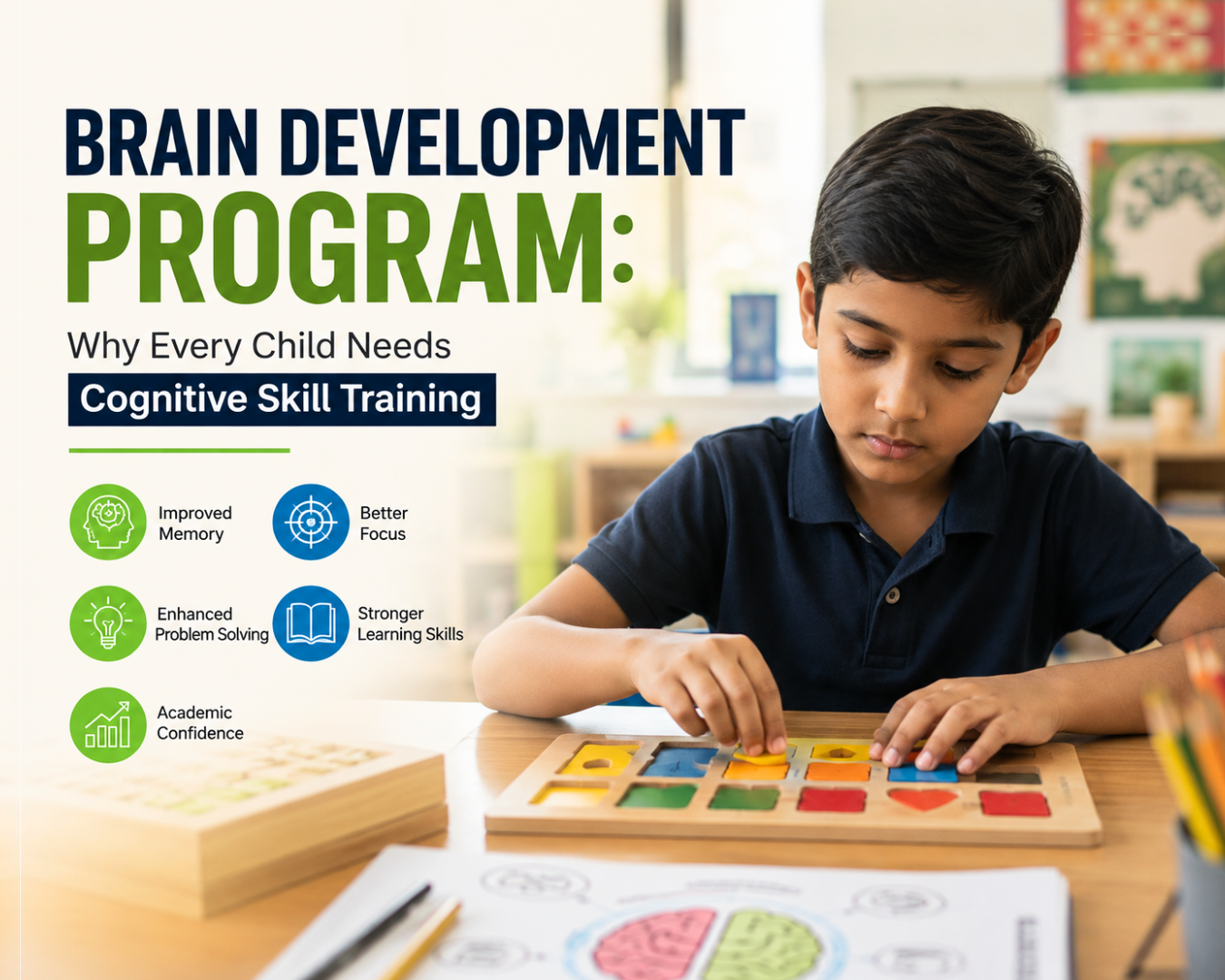
A Brain Development Program is a scientifically designed training process that helps improve the way the brain learns, processes information, remembers facts, and makes decisions.
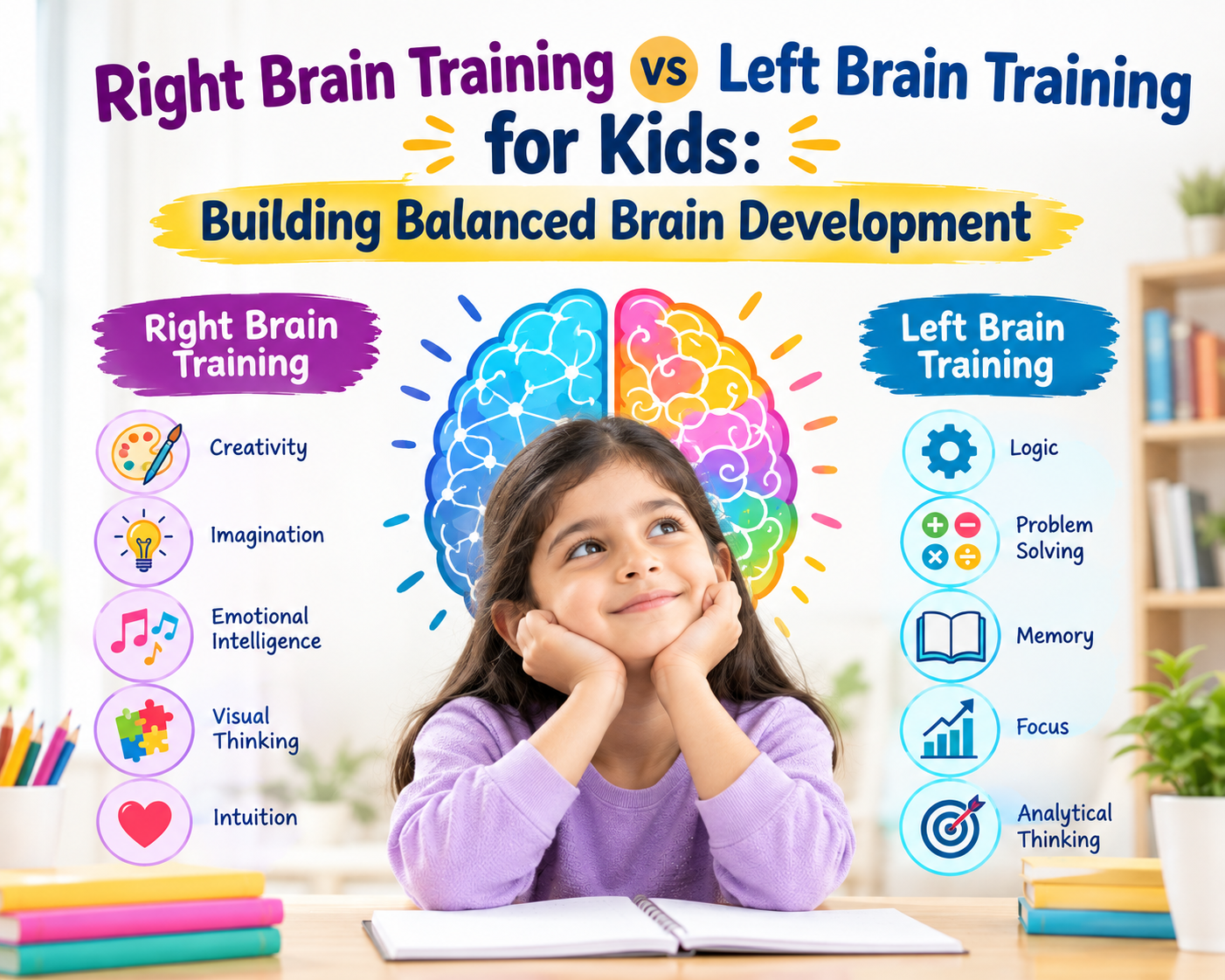
Rather than teaching school subjects directly, these programs focus on strengthening the brain’s core functions such as:
- Memory
- Attention and concentration
- Logical reasoning
- Problem-solving
- Creativity
- Emotional intelligence
- Decision-making
- Processing speed
The objective is to make learning easier, faster, and more enjoyable for children.
Why Brain Development Matters During Childhood
Childhood is one of the most important stages of brain growth. During these years, the brain develops rapidly and forms millions of neural connections.
The stronger these connections become, the better children perform in academics, sports, communication, and daily life.
A quality Brain Development Program provides structured activities that stimulate different areas of the brain and encourage healthy cognitive growth.
Instead of memorizing information, children learn how to think, analyze, and understand concepts more effectively.
According to research published by the National Center for Biotechnology Information (NCBI), early brain plasticity plays a key role in shaping how children learn and adapt throughout life.
Benefits of Brain Training for Children
1. Better Concentration
Many children struggle to stay focused during classes or while completing homework.
Regular Brain Training activities improve attention span and help children remain engaged for longer periods.
Improved focus also reduces careless mistakes during examinations.
2. Improved Memory
Memory is one of the most important learning skills.
Brain exercises strengthen both short-term and long-term memory — a core focus of programs like M Power — helping children:
- Remember lessons more effectively
- Recall information quickly
- Improve academic performance
- Retain concepts for longer periods
Strong memory also builds confidence during tests.
3. Faster Learning Ability
Every child learns differently.
A well-designed Brain Development Program enhances Learning Ability by improving the brain’s information processing speed.
Children begin to:
- Understand concepts quickly
- Learn new topics with ease
- Connect ideas more effectively
- Develop independent thinking skills
Learning becomes less stressful and more enjoyable.
4. Better Problem-Solving Skills
Life is full of situations that require critical thinking.
Brain development activities encourage children to:
- Analyze situations
- Think logically
- Evaluate different solutions
- Make better decisions
These abilities benefit both academic and real-life situations.
5. Increased Creativity
Creative thinking helps children discover new ideas and innovative solutions.
Brain stimulation exercises — such as those used in the Brain Optimization program — encourage imagination and flexible thinking.
Creative children often perform better in:
- Art
- Writing
- Science projects
- Innovation
- Public speaking
Creativity also boosts confidence.
Brain Training Helps Beyond Academics
A common misconception is that brain development programs are only useful for improving school marks.
In reality, they also support:
- Communication skills
- Emotional control
- Social interaction
- Leadership qualities
- Confidence building
- Decision-making
- Time management
These life skills contribute significantly to long-term success.
Student Development Through Cognitive Skill Training
True Student Development involves much more than textbook knowledge.
Children need to become:
- Independent thinkers
- Effective communicators
- Confident learners
- Responsible decision-makers
- Emotionally balanced individuals
Brain development programs help create a strong foundation for lifelong learning.
Instead of depending entirely on teachers or parents, children gradually become self-directed learners.
Does Brain Training Improve IQ?
One common question parents ask is whether brain training increases intelligence.
Research suggests that while intelligence is influenced by many factors, consistent cognitive exercises can strengthen several mental abilities associated with IQ Enhancement, including:
- Working memory
- Processing speed
- Logical reasoning
- Pattern recognition
- Mental flexibility
Rather than claiming to permanently increase IQ scores, quality programs aim to improve the cognitive skills that support intelligent thinking and academic performance.
Signs Your Child May Benefit from a Brain Development Program
Every child can benefit from cognitive training, but it may be especially helpful if your child:
- Gets distracted easily
- Has difficulty remembering lessons
- Takes longer to understand concepts
- Avoids challenging tasks
- Struggles with concentration
- Lacks confidence in studies
- Has difficulty organizing work
- Finds problem-solving difficult
Early intervention often leads to better outcomes — programs such as Cognitive Fitness – Toddlers are designed to support this from a young age.
Activities Used in Brain Development Programs
Most structured programs include age-appropriate activities such as:
- Memory games
- Pattern recognition exercises
- Logic puzzles
- Visual perception activities
- Speed-thinking challenges
- Creative problem-solving tasks
- Attention-building exercises
- Multi-sensory learning techniques
These activities are designed to be engaging so children learn while enjoying the process.
Parents Play an Important Role
A child’s cognitive growth is influenced not only by training sessions but also by the home environment.
Parents can support brain development by:
- Encouraging reading habits
- Limiting excessive screen time
- Promoting outdoor play
- Providing nutritious meals
- Ensuring adequate sleep
- Engaging in meaningful conversations
- Playing educational games together
- Praising effort instead of only results
Small daily habits make a lasting difference. For general guidance on healthy child development milestones, the CDC’s child development resource is a helpful reference for parents.
Choosing the Right Brain Development Program
Not all programs are the same. When selecting one for your child, look for:
- Age-appropriate curriculum
- Qualified trainers
- Interactive learning methods
- Personalized assessment
- Regular progress tracking
- Practical cognitive activities
- Positive and supportive environment
A good program focuses on overall development rather than promising unrealistic results.
Long-Term Benefits of Brain Development
Children who regularly participate in cognitive skill training often develop:
- Better concentration
- Stronger memory
- Improved learning ability
- Greater confidence
- Better emotional regulation
- Strong analytical thinking
- Enhanced creativity
- Lifelong curiosity for learning
These qualities continue to benefit them throughout school, higher education, and future careers.
Conclusion
Every child has unique potential waiting to be nurtured. A well-structured Brain Development Program goes beyond improving grades by strengthening the cognitive skills that shape lifelong success.
Through consistent Brain Training, children can enhance their Learning Ability, support healthy Student Development, and build the mental skills associated with IQ Enhancement. When combined with supportive parenting, quality education, healthy habits, and regular practice, cognitive skill training helps children become confident learners, effective problem-solvers, and resilient individuals ready for future challenges.
Investing in brain development today is an investment in a child’s brighter tomorrow. Book a free demo with Head and Heart to explore the right program for your child, or learn more about our institute.
Frequently Asked Questions (FAQs)
1. What is a Brain Development Program?
A Brain Development Program is a structured cognitive training program designed to improve memory, concentration, reasoning, problem-solving, and learning skills in children.
2. At what age should children start brain training?
Many programs offer age-appropriate activities for children as young as four or five years old, with exercises tailored to different developmental stages — see our Cognitive Fitness – Toddlers program.
3. Can brain training improve academic performance?
Brain training supports skills such as focus, memory, and information processing, which can make learning more effective and may contribute to better academic performance.
4. Does brain training increase IQ?
Brain training can strengthen cognitive functions linked to intelligent thinking, such as working memory and reasoning. However, reputable programs should avoid guaranteeing permanent increases in IQ scores.
5. How often should children attend a Brain Development Program?
The ideal frequency depends on the program and the child’s needs. Consistent practice, along with reinforcement at home, generally produces the best results.